


Last Updated: October 28, 2026
Quick Summary
The vetericyn vs mycopet comparison comes down to two different jobs: Vetericyn is a topical wound and skin spray for cuts, scrapes, and hot spots, while MycoPet is an oral supplement for gut and immunity support. Neither replaces the other, so choose based on whether your dog's problem is on the skin or internal.
- Vetericyn is applied to the skin as a spray; MycoPet is given by mouth as a supplement.
- MycoPet's blend of functional mushrooms, prebiotics, and probiotics supports digestion over weeks, not wounds.
- For an active hot spot, topical care is the relevant tool and an oral supplement is not.
- Contact your vet if a hot spot is large, spreading, oozing pus, or not improving within a day.
- Read the full ingredient panel and check for anything your dog has reacted to before.
Table of Contents
- Vetericyn vs MycoPet for Dogs: Two Products, Two Different Jobs
- Vetericyn: A Topical Wound and Skin Spray
- MycoPet: A Gut and Immunity Supplement
- Side-by-Side Comparison: Ingredients, Form, and Intended Use
- Ingredient-by-Ingredient: What Is Actually in Each Product
- How to Clean a Dog Wound at Home
- Dog Hot Spot Treatment: Where Each Product Fits
- When to See a Vet for a Dog Wound
- Choosing the Right Product for Your Dog's Needs
- Frequently Asked Questions
Vetericyn vs MycoPet for Dogs: Two Products, Two Different Jobs
The most useful thing we can tell you about the vetericyn vs mycopet for dogs question is this: these products do not do the same job. Comparing them head to head on "which treats a wound better" is like asking whether a bandage or a multivitamin is the better first-aid kit.
That distinction matters because pet owners searching this comparison usually have one of two problems: an itchy, wounded, or irritated dog, or a dog they want to support from the inside out. The right answer depends entirely on which problem you're solving.
Below, we'll break down what each product actually is, what's in it, and when each one makes sense, so you can stop guessing and buy the right thing. At e11ement Pet, we make a hypochlorous acid spray for daily skin, coat, and paw care, so we have a clear view of where topical care ends and internal support begins.
They are not interchangeable, and one cannot substitute for the other.
Vetericyn: A Topical Wound and Skin Spray
That's the first filter in the vetericyn vs mycopet decision: is the problem visible on the skin, or is it internal?
MycoPet: A Gut and Immunity Supplement
Where MycoPet fits: dogs with sensitive digestion, dogs on a wellness routine, or dogs whose owners want to support immune health alongside a balanced diet. It is not a substitute for cleaning a wound or treating a hot spot.
Side-by-Side Comparison: Ingredients, Form, and Intended Use
| Feature | Vetericyn | MycoPet |
|---|---|---|
| Form | Topical spray | Oral supplement |
| Route | Applied to skin | Given by mouth |
| Primary job | Wound and skin cleaning | Gut and immunity support |
| Active approach | Surface care | Functional mushrooms, prebiotics, probiotics |
| Best for | Cuts, scrapes, hot spots | Daily wellness, digestion |
| Timeline | Immediate, per-use | Ongoing, daily routine |
| Replaces the other? | No | No |
Ingredient-by-Ingredient: What Is Actually in Each Product
This is the section most comparison articles skip, and it is the one that actually answers the question. Instead of declaring a winner, break each product down by what is in it, what each ingredient does, and what it cannot do.
The topical side: hypochlorous acid and wound-care sprays
Hypochlorous acid (HOCl) is the same molecule naturally produced by your pet's immune system.
Hypochlorous acid is used in e11ement Pet's spray for daily skin, coat, and paw care.
The oral side: functional mushrooms, prebiotics, and probiotics
What this blend does well: supporting digestive regularity and general immune wellness over weeks. What it does not do: clean a wound, calm an active hot spot, or replace a veterinary diagnosis for chronic itching.
The comparison that actually matters
The practical takeaway: read the full ingredient panel on each label, check for anything your dog has reacted to before, and match the ingredient list to the job. A probiotic blend does nothing for a paw scrape. A wound spray does nothing for digestion. If a label does not state concentration, strain, or CFU count, that absence is itself information.
How to Clean a Dog Wound at Home
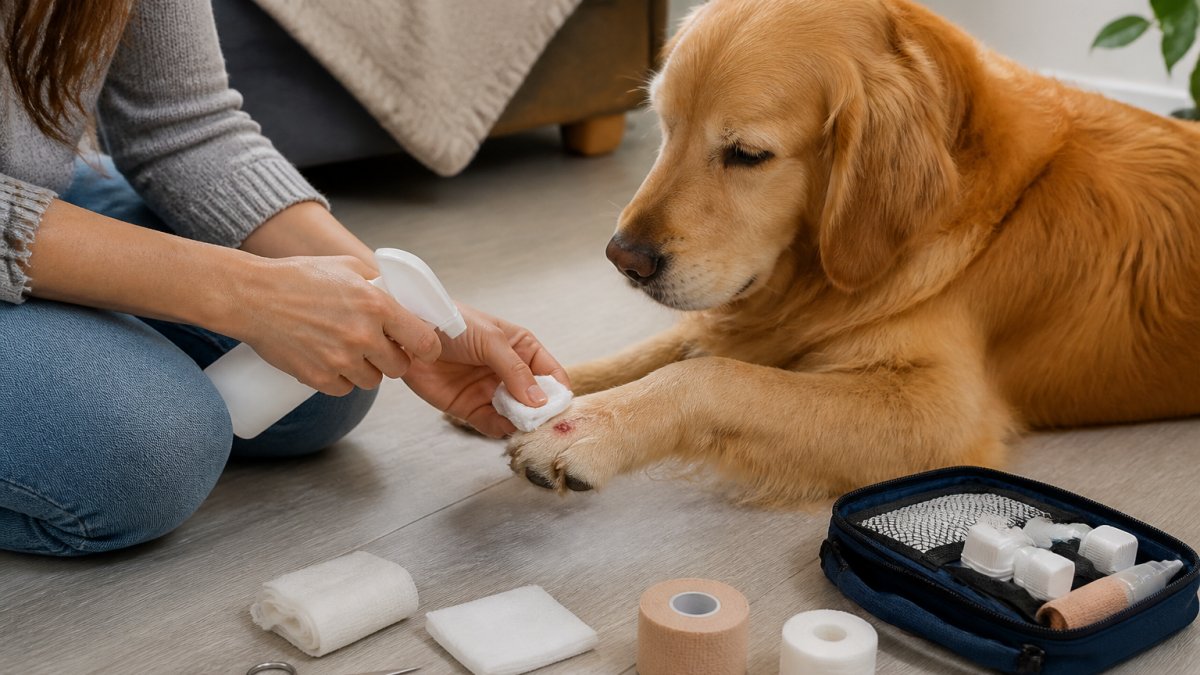
- Wash your hands before touching the wound.
- Flush the area with clean water or a gentle topical spray to lift dirt.
- Pat dry with a clean cloth; don't scrub.
- Keep your dog from licking the area while it settles.
- Watch for swelling, discharge, or worsening redness over the next day.
Dog Hot Spot Treatment: Where Each Product Fits
Hot spots (acute moist dermatitis) are the clearest test of the vetericyn vs mycopet distinction, because they sit right at the boundary between surface care and internal support.
What a hot spot actually is
That cycle is why topical care is the first response. The goal is to interrupt the licking, keep the surface clean, and let the skin settle.
Where topical care fits
What topical care cannot do: it will not resolve the underlying trigger. If the hot spot keeps returning, the cause is usually fleas, allergies, ear disease, or another source of irritation that needs a veterinary diagnosis.
Where an oral supplement fits
An oral gut-and-immunity supplement plays a different role. It is not a treatment for an active hot spot, and it will not calm the skin today. Its place is in the background: supporting overall immune and digestive wellness in dogs prone to recurring skin issues, alongside a balanced diet and a vet-guided plan. Think of it as part of a long-term routine, not a first-aid step.
Safety and when to escalate
Hot spots can worsen quickly, and some need veterinary care. Contact your vet if the spot is large, spreading, or oozing pus; if your dog seems painful when touched; if the area is near the eye or ear canal; or if it does not improve within a day of home care. Dogs with allergies, thyroid disease, or chronic skin conditions warrant a lower threshold for a visit.
The takeaway for this comparison
For an active hot spot, topical care is the relevant tool and an oral supplement is not. For a dog with recurring skin problems, the supplement may support overall wellness while your vet addresses the trigger. Neither product replaces a diagnosis, and neither is a reason to delay care for a worsening lesion.
When to See a Vet for a Dog Wound
Puppies, senior dogs, and dogs with chronic conditions warrant a lower threshold for a vet visit. When in doubt, call. A topical spray and an oral supplement are supportive tools, not replacements for veterinary advice on a serious wound.
Choosing the Right Product for Your Dog's Needs
The decision comes down to a simple question: where is the problem?
For daily skin, coat, and paw care, e11ement Pet offers a gentle hypochlorous acid spray.
Frequently Asked Questions
What is the difference between Vetericyn and MycoPet for dogs?
Vetericyn is a topical wound and skin spray applied directly to cuts, scrapes, and irritated skin. MycoPet Gut & Immunity+ is an oral supplement containing functional mushrooms, prebiotics, and probiotics, formulated to support digestion and immune health from the inside. One addresses surface skin issues, the other supports overall gut and immune wellness. They are not interchangeable and are not designed to treat the same problems.
Do vets recommend Vetericyn?
Many veterinarians suggest Vetericyn as a first-aid option for minor wounds and skin irritation because it is non-toxic and gentle. However, veterinary advice varies by case. A deep cut, puncture, or infected wound needs professional care. Ask your vet whether a topical spray suits your dog's specific wound, and follow their guidance on cleaning and monitoring.
Can I use a wound spray on a dog's hot spot?
A gentle wound spray can help clean a hot spot and keep the area free of debris, but it will not stop the underlying itch cycle. Hot spots often need veterinary treatment, including clipping the fur, topical medication, and sometimes oral antibiotics or steroids. Use a lick-safe spray for daily cleaning as part of a broader dog hot spot treatment plan your vet approves.
How do I clean a dog wound safely at home?
Start by washing your hands and restraining your dog calmly. Flush the wound with a gentle spray or saline to remove dirt, then pat dry with a clean cloth. Avoid hydrogen peroxide and alcohol, which damage tissue. Cover the area if your dog licks it, and check daily for redness, swelling, or discharge. If the wound is deep or shows signs of infection, see a vet.
Your dog's skin deserves care that's gentle enough for every day and simple enough to actually use. e11ement Pet makes a hypochlorous acid spray for skin, coat, and paw care, using the same molecule your pet's immune system produces, made in Canada. Get started with e11ement Pet and give your dog gentle daily support for healthier skin, coat, and paws.


