


Last Updated: November 1, 2026
Quick Summary
Daily paw cleaning for active dogs means rinsing, wiping, and fully drying each paw after every walk, hike, or park visit, which takes about two minutes. Rinse loose dirt in lukewarm water, wipe pads and between the toes with a damp cloth, then pat dry thoroughly before your dog goes back outside.
- Set up a small entryway kit with two soft cloths, a shallow bowl of lukewarm water, and a gentle paw cleaner.
- Never use hot water or human shampoo, since repeated soap washing can dry out paw pads.
- Pat paws dry instead of rubbing, and dry between every toe where moisture gets trapped.
- Match cleaning frequency to the outing: rinse after every walk when ice melt is on sidewalks.
- See a vet for persistent limping, bleeding pads, swelling, or discharge rather than just wiping down.
Table of Contents
- Why Daily Paw Cleaning Matters for Active Dogs
- What You'll Need Before You Start
- How to Clean Dog Paws After a Walk
- How to Clean Between Dog Toes Without Causing Stress
- Choosing a Dog Paw Cleaner Spray That's Lick-Safe
- How to Dry Dog Paws Properly After Cleaning
- How Often to Clean Paws and When to Scale Back
- Build Your Daily Paw Care Routine With e11ement Pet
- Frequently Asked Questions
Why Daily Paw Cleaning Matters for Active Dogs
Daily paw cleaning for active dogs is the habit of removing dirt, salt, mud, and debris from your dog's feet after every walk, hike, or park visit.
The American Kennel Club's paw care guidance makes the case plainly: pet-safe wipes can quickly clear muddy, sandy, or salty paws, and paws should be dried fully before the dog goes back outside.
Here's the number that shows this is no niche habit. According to the American Pet Products Association's dog report, dog-wipe ownership more than doubled year over year, up 108%.
At e11ement Pet, we built our spray around exactly this use case: a quick, gentle cleanup after every outing.
What You'll Need Before You Start
You don't need much. A small kit by the door beats a cupboard full of grooming gear you never reach for.
- Two soft cloths: one damp, one dry. Microfiber works well.
- A shallow bowl of lukewarm water: never hot water, which dries out pads.
- A gentle paw cleaner: a lick-safe spray or pet-safe wipes.
Skip the human shampoo, since repeated soap washing can dry out paw pads. A Reddit commenter in a dog-owner discussion on daily paw washing made the same point: paws rarely need soap unless they're actually muddy.
Set this up once. Then the routine takes two minutes instead of ten.
How to Clean Dog Paws After a Walk
Here's the core routine, and it's the part most owners rush. Work through it in order and you'll get the debris out without turning paw cleaning into a wrestling match.
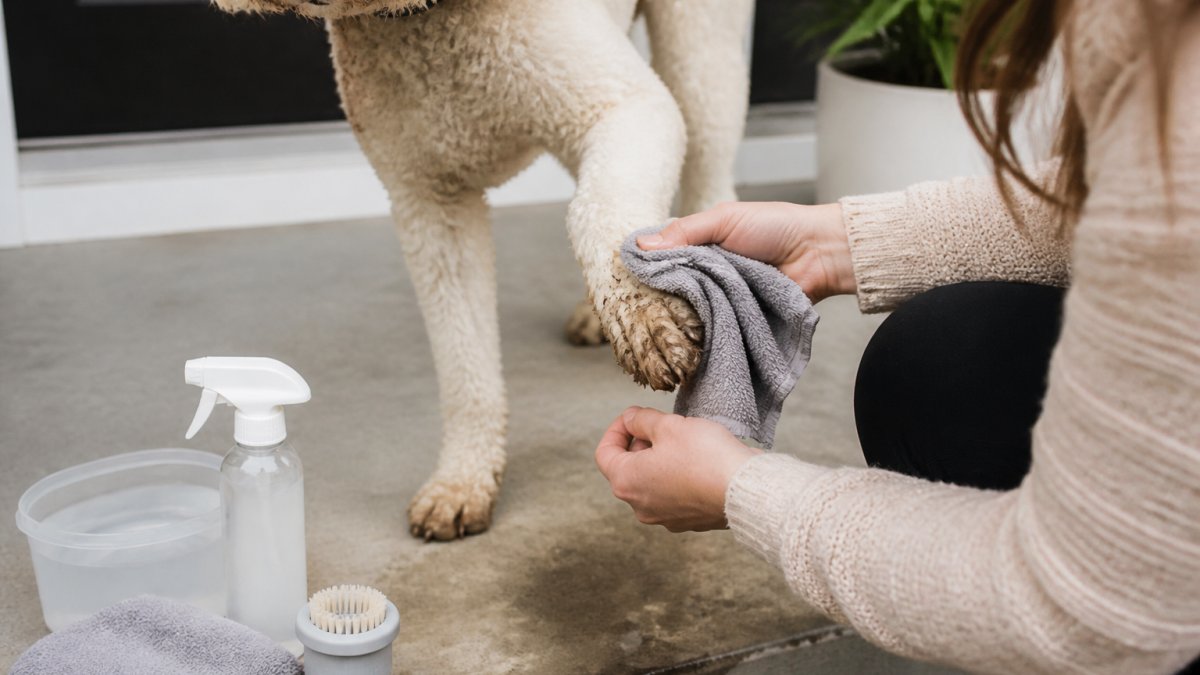
Step 1: Rinse Loose Dirt and Debris
Start with water, not soap. Dip each paw into a shallow bowl of lukewarm water and swish gently. This lifts mud, dust, sand, and grit out of the fur between the toes before you rub anything in.
Check for the small stuff too: burrs, tiny stones, bits of ice melt, twigs. Those lodge between toes and cause most of the soreness owners blame on "sensitive paws."
Step 2: Wipe Pads and Toes With a Damp Cloth
Take your damp cloth and wipe each pad, then each toe, one at a time. Use a gentle circular motion on the pad and work the cloth between the toes where grit collects.
Follow with a second pass using a dog paw cleaner spray or pet-safe wipes for anything the water missed. A lick-safe spray can be used on a wriggling dog without worrying about what happens when they immediately lick their foot.
How to Clean Between Dog Toes Without Causing Stress
Most dogs tolerate paw handling fine if you build the habit early and keep it short. The trick is to make it boring.
A few things that help:
- Start with the front paws. Dogs are usually calmer about front feet.
- Lift the paw gently from the wrist, not the toes.
- Talk in a low, steady voice and reward with a treat after each paw.
What most guides miss: the space between the toes is where moisture gets trapped.
If your dog has long fur between the toes, trim it. Shorter fur means less mud held against the skin and much faster drying.
Choosing a Dog Paw Cleaner Spray That's Lick-Safe
This is the decision that matters most, and it's where ingredient lists separate the good products from the marketing.
A lick-safe paw cleaner is formulated so that small amounts left on the paw are not harmful if your dog licks them off.
What to look for:
- A short, named ingredient list. If you can't identify what's in it, don't spray it on a paw.
- No added fragrance or dyes. Cats and rabbits are especially sensitive to scent.
- No alcohol or harsh soaps for daily use.
Our own answer to this is the Hypochlorous Pet Spray, which uses hypochlorous acid, the same molecule a pet's immune system produces, plus water and salt.

One honest caveat: a spray is for surface cleaning, not for deep wounds or active infections. Those need a vet.
How to Dry Dog Paws Properly After Cleaning
Drying is the step everyone skips, and it's the one that prevents problems. A paw that stays damp between the toes can keep the skin soft and traps moisture, which is why drying matters after wet walks.
Here's how to dry dog paws so moisture doesn't linger:
- Pat, don't rub. Rubbing pushes water deeper into the fur between the toes and roughens the pad surface. Blot with a dry microfiber cloth, pressing firmly for a second on each pad.
- Dry between every toe. Use a corner of the towel, gently separate each toe with your fingers, and wipe down into the webbing. This is the spot a quick towel-over-the-foot pass never reaches.
- Finish with a dry cloth on the pads and look at them while you're there, check for cracks, split pads, redness, or a foreign object wedged in the pad.
- Let the dog stand on a dry towel for a minute before they head inside, especially on tile or hardwood where wet pads slide.
- Air-dry the entryway mat, not the dog. If your dog has thick or long fur between the toes, a few minutes in a warm room with a dry towel underfoot does more than a second rub-down.
The American Kennel Club's guidance is direct on this point: dry paws thoroughly before the dog goes back outside. Wet pads pick up more dirt and are more likely to crack in cold air.
Why damp paws cause problems
A paw that stays wet for hours, because the dog lay down after a wet walk, or because you wiped but didn't dry between the toes, sets up three common issues:
Drying in different conditions
- Rain and slush: dry between the toes every time, and change the entryway towel daily so you're not re-wetting the paw with a damp cloth.
- Winter: dry fully, then apply a paw conditioner or moisturizer to reduce cracking from ice melt and dry indoor heat.
- Beach and lake days: rinse sand and salt out first, then dry, sand left in damp fur acts like sandpaper between the toes.
How Often to Clean Paws and When to Scale Back
There's no single correct frequency, and any guide that gives you one number is guessing. Hill's Pet's paw-cleaning guidance notes that frequency depends on the dog's activity level and the season, not a fixed schedule. For an active dog, the better question is: what did the outing involve, and what does that paw need tonight?
Here's how we'd set it:
| Dog and conditions | Cleaning frequency | Notes |
|---|---|---|
| Daily hiker or park regular | After every outing | Full rinse and dry each time |
| Suburban walker, dry weather | Every 2-3 days | Wipe down if paws look dusty |
| Winter, ice melt on sidewalks | After every walk | Rinse salt off, dry fully |
| Senior or low-activity dog | Weekly, plus as needed | Check pads for cracks |
| Sensitive skin or allergies | Daily, gentle products only | Avoid soap; watch for redness |
A routine that matches the outing, not the calendar
Active dogs don't do the same thing every day, so the cleanup shouldn't be identical either. Match the routine to the terrain:
- Short pavement walk: a damp cloth over the pads and between the toes, then a dry pass. No bowl needed unless the pavement was salted or wet. Thirty seconds per paw.
- Muddy trail or off-leash park: full rinse in a shallow bowl of lukewarm water, then wipe, then dry between every toe. Mud packs into the webbing and dries into grit that rubs.
- Beach or lakeshore: rinse sand and salt out before it dries, then dry fully. Sand left in damp fur acts like sandpaper on the next walk.
When to scale back
More cleaning isn't always better. Over-cleaning with soap strips the natural oils that keep pads supple. If pads look dry and flaky, you're cleaning too aggressively, not too little.
Consistent, gentle cleaning generally beats occasional deep scrubbing, and matching the routine to what the dog actually did outdoors is worth doing.
Watch out: if you find yourself reaching for soap every day, stop.
Build Your Daily Paw Care Routine With e11ement Pet
Two minutes. That's the whole commitment. Rinse, wipe, dry, and check, every time your dog comes through the door.
Do it consistently and you'll notice fewer cracked pads, less licking at the toes, and a dog that stops tracking mud across the hallway.
That's what our spray is for.
Get started with e11ement Pet and make paw cleaning the easiest part of your dog's day.
Frequently Asked Questions
Should you clean your dog's paws after every walk?
Not every walk needs a full wash. A quick wipe or rinse is enough after most outings, especially on dry pavement or grass. Save the fuller paw cleaning routine for muddy, sandy, or salty conditions, or after hikes on rough terrain. Cleaning frequency generally follows your dog's activity level and the season rather than a fixed schedule. Active dogs usually need more frequent cleaning than couch companions.
Can I use a dog paw cleaner spray every day?
Yes, if the formula is gentle enough for daily use. Look for a short ingredient list and a product labeled for routine paw care, not a medicated treatment. e11ement Pet's Hypochlorous Pet Spray ($7.99) contains only water, salt, and HOCl, the same molecule a pet's immune system produces, and is designed for daily skin, coat, and paw care. Spray onto the paw, wipe away loosened dirt, and dry thoroughly. Skip any spray with strong fragrances or ingredients your vet has flagged for your dog.
How do you clean mud and dirt from between a dog's toes?
Spread the toes gently with your fingers and wipe between them with a damp cloth or pet-safe wipe, working from the top of the paw down to the pad. Rinse first if the mud is thick, since wiping wet mud just pushes it deeper. Dry each gap fully afterward, because trapped moisture between toes is a common cause of irritation. Check for small stones, burrs, or grass seeds while you're in there, and remove anything stuck with tweezers if your dog stays still.
What signs of irritation should you look for on your dog's paws?
Check pads and toes during every cleaning for redness, swelling, cracks, small cuts, or hair loss. Watch for excessive licking, chewing, or limping between sessions, since these often signal discomfort before anything is visible. If irritation persists, worsens, or your dog refuses to bear weight, contact your veterinarian rather than continuing at-home cleaning.


