


Table of Contents
- Pet Skin Care for Canadian Owners: Start With the Basics
- A Step-by-Step Home Routine for Skin and Coat Health
- Dog Dry Skin Remedies That Work at Home
- Itchy Skin in Dogs: Finding the Cause Before You Treat
- Hypochlorous Acid Spray for Pets: What It Does and How to Use It
- Winter Paw Care for Dogs and Cold-Weather Skin Protection
- Choosing Pet-Safe Products: Ingredients, Labels and Cost
- When to Consult a Veterinarian About Skin Issues
- Frequently Asked Questions
Last Updated: October 19, 2026
Pet Skin Care for Canadian Owners: Start With the Basics
Pet skin care for Canadian owners starts with one simple idea: healthy skin is a barrier, and that barrier needs daily support. At e11ement Pet, we talk to pet parents every week who are confused by flaking coats, itchy paws, and shelves full of products. The good news is that basic skin and coat care follows a short, repeatable routine.
Here is what matters most before you buy anything: most skin problems are not solved by a single product. They are solved by consistent grooming, correct bathing, and gentle daily cleansing.
What Healthy Skin and Coat Actually Look Like
Healthy skin is pale, flexible, and free of crusts or red patches. A healthy coat looks glossy, lies flat, and does not shed in clumps.
Watch for these signs of trouble:
- Greasy or dull patches
- Visible flakes or dandruff
- Constant licking, chewing, or scooting
- Redness between the toes or under the belly
- A musty smell that returns quickly after bathing
Cold winters and dry indoor air make all of these more likely. Canadian homes run furnaces for months, and indoor heating pulls moisture from the air and from your pet's skin. That single fact explains a lot of winter itch.
A Step-by-Step Home Routine for Skin and Coat Health
A good routine takes about ten minutes a week, plus a bath every few weeks. Build it in this order: brush, check, bathe, and protect.
- Brush first. Brushing lifts loose hair and spreads natural oils.
- Run your hands over the body. Feel for scabs, bumps, and warm spots.
- Bathe on schedule. Use a gentle pet shampoo, never dish soap.
- Dry thoroughly. Damp undercoat grows yeast.
- Protect paws and skin after outdoor time.
Weekly Grooming and Regular Brushing
Regular brushing is the highest-value habit in pet skin care. It removes dead hair before it mats, improves air flow to the skin, and lets you find problems early.
Short-coated dogs do well with a rubber curry brush twice a week. Double-coated breeds need a slicker brush and an undercoat rake, especially in spring. Cats usually accept a soft brush on the cheeks and back first, then the rest of the body.
A common mistake is brushing a dry, matted coat. Work out tangles with your fingers first. Pulling mats tears skin and creates hot spots.
How Often to Bathe and How to Do It Gently
Bathe most dogs every four to eight weeks. Dogs with oily coats may need every three weeks. Cats rarely need full baths unless they are soiled or a vet advises it.
Technique matters more than frequency:
- Brush out mats before water touches the coat
- Use lukewarm water, not hot
- Dilute shampoo and work it into the undercoat
- Rinse twice as long as you think you need to
- Dry the undercoat completely
Leftover shampoo residue is a hidden cause of itching. So is trapped moisture.
Dog Dry Skin Remedies That Work at Home
Dry skin in dogs usually comes from low humidity, over-bathing, or a diet short on fats. Fix the environment first, then the routine.
Practical steps that help:
- Run a humidifier in the room where your dog sleeps
- Cut bath frequency back if the coat looks dull
- Add an omega-3 supplement after checking with your vet
- Switch to a gentle, fragrance-free shampoo
- Wipe paws and skin after walks instead of bathing the whole dog
A daily spray is easier on the skin barrier than repeated shampooing. That is the logic behind our Hypochlorous Pet Spray: water, salt, and HOCl, nothing else, at $7.99.

Itchy Skin in Dogs: Finding the Cause Before You Treat
Itchy skin in dogs has four common causes: parasites, allergies, infections, and dry skin. Treating the wrong one wastes money and delays relief.
Work through this checklist:
- Fleas and mites: part the coat and look for specks or scabs
- Allergies: itching that follows a season, a food, or a new detergent
- Infections: yeasty smell, greasy patches, or red skin folds
- Dryness: fine flakes with no redness, worse in winter
If two or more signs point to infection, stop home treatment and book a vet visit. Antifungal and antibiotic treatment needs a diagnosis.
Hypochlorous Acid Spray for Pets: What It Does and How to Use It
Hypochlorous acid is a compound your pet's immune system produces naturally to fight microbes. A hypochlorous acid spray for pets copies that molecule in a bottle and uses it to cleanse skin, soothe irritation, and support a healthy coat.
It is not bleach. Bleach is sodium hypochlorite, a different chemical with a very different pH. Hypochlorous acid is gentle enough for daily use on skin and paws.
How we suggest using it:
- Spray a light mist on paws after outdoor time
- Mist irritated or smelly skin once or twice daily
- Wipe folds and creases with a dampened cloth
- Let the area air dry, no rinsing needed
Our spray is made in Canada and registered as a Veterinary Health Product (# U8J1). That registration matters if you want proof the formula and labeling were reviewed.
How to Fit It Into a Daily Routine
Attach the spray to something you already do. Keep it by the door for post-walk paw care. Keep a second bottle near the food bowl for a quick skin check.
Two short sessions a day beat one long one. A ten-second mist on each paw after a hike is enough.
Winter Paw Care for Dogs and Cold-Weather Skin Protection
Winter paw care for dogs comes down to three threats: ice, salt, and cold.
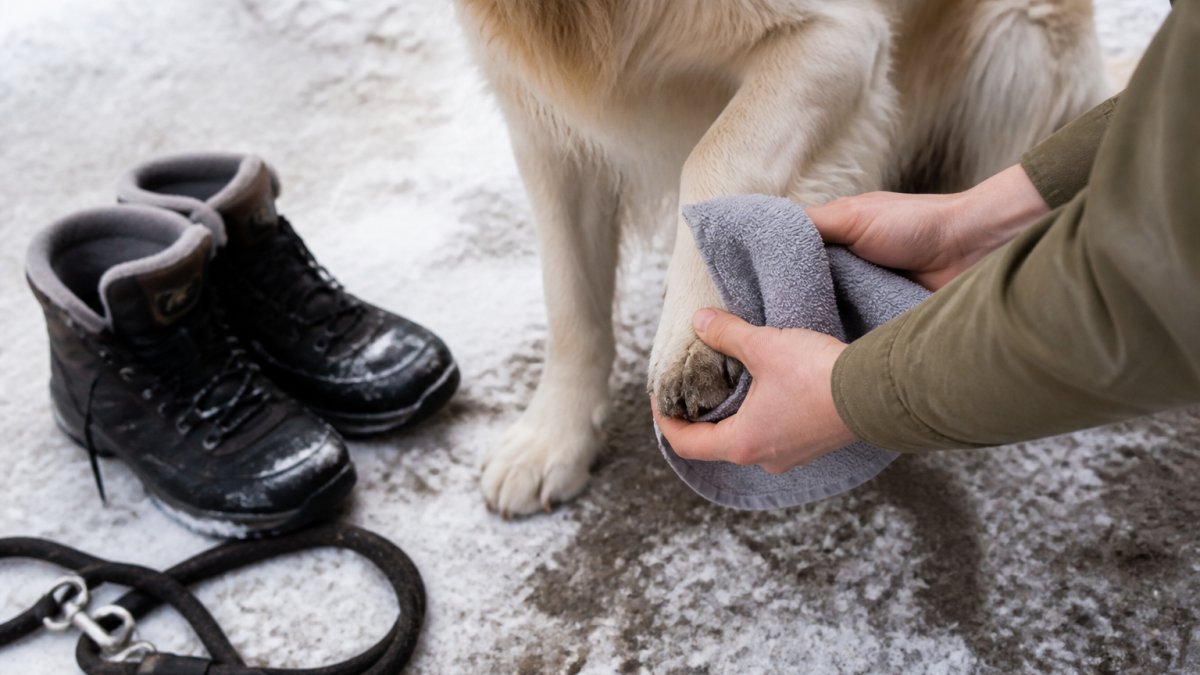
Ice packs between the toes and pulls at the skin with every step. The hair between the pads holds snow, which melts from body heat and refreezes into hard balls.
Road salt is the bigger hazard. Rock salt and calcium chloride burn paw pads on contact and are toxic if licked off during grooming.
Cold itself is less damaging to paws than most owners assume, but it worsens any existing dryness.
Build these habits:
- Wipe paws with a damp cloth the moment you get home, then dry them
- Trim the hair between the toes monthly through winter
- Use pet-safe ice melt on your own walkway and avoid treated sidewalks where possible
- Keep walks shorter when the temperature drops sharply
- Check pads for cracks and redness after every cold-weather walk
- Apply a thin layer of a pet-safe paw balm before walks on very cold or salty days, and wipe it off after
Boots help, but many dogs refuse them. Wiping is the fallback that always works.
Indoor heating is the other half of winter skin care. Furnaces run for months, and indoor humidity can drop well below the comfort range for skin.
Choosing Pet-Safe Products: Ingredients, Labels and Cost
Pet-safe products list few ingredients and explain each one. Read the label before you read the marketing.
Ingredients to avoid or question:
- Fragrances and dyes, common causes of contact irritation, especially on paws and bellies
- Tea tree oil, toxic to cats and risky for dogs if ingested during grooming
- Essential oils generally, many are not safe for cats, and concentration matters more than source
- Sodium lauryl sulfate and similar harsh surfactants, strip the skin barrier with repeated use
- Human shampoos and dish soaps, formulated for a different skin pH and far too degreasing for routine pet use
- Alcohol-based sprays, dry the skin and sting on irritated areas
How to read a label properly:
- Is the full ingredient list visible, not just the "key ingredients"?
- Are fragrances and dyes absent?
- Is the pH stated or described as skin-friendly?
- Is there a registration or licence number?
- Is the product intended for daily use, or only for occasional bathing?
- Does the label name the species it is for?
A product that passes all six is usually a reasonable choice for routine care. A product that fails the first two is worth skipping regardless of what the front label claims.
Species and age matter. Cats are not small dogs: their skin and liver handle ingredients differently, and many dog products are not appropriate for them. Puppies and kittens have thinner skin and groom more, so residue matters more.
Cost deserves a fair look. Compare cost per use, not cost per unit, and factor in whether the product replaces another step in your routine.
Registration is a signal, not a guarantee. In this country, a Veterinary Health Product registration number means the formula and labeling were reviewed for the intended use.
When to Consult a Veterinarian About Skin Issues
Call your vet when home care stops working. Specifically, book a visit if you see:
- Itching that keeps your pet awake
- Hair loss in patches
- Open sores or bleeding
- A bad smell that returns within a day
- Symptoms lasting more than two weeks
Skin problems rarely fix themselves once infection sets in. Early treatment is cheaper and kinder.
Frequently Asked Questions
What causes dry or itchy skin in dogs and cats?
Most cases come down to a short list: dry indoor air, frequent bathing with harsh shampoos, parasites such as fleas, seasonal allergies, food sensitivities, or underlying conditions like thyroid problems. Cold weather and indoor heating pull moisture from the coat, which is why itchiness often spikes in winter. Start by reviewing your grooming routine and product choices, then look at environment and diet. If scratching persists beyond a couple of weeks, or comes with redness, hair loss or scabs, a veterinarian should examine your pet to rule out infection and allergies.
How often should I bathe my pet?
Most dogs do well with a bath every four to eight weeks, and many need less. Cats and rabbits generally groom themselves and rarely need full baths unless a vet recommends one. Over-bathing strips natural oils and can make dry skin worse, so spot-clean paws and soiled areas between baths instead. Always use a pet-safe shampoo rather than human products, rinse thoroughly, and dry the coat properly, especially in colder months when damp fur sits against the skin.
Can hypochlorous acid spray be used for routine pet skin care?
Yes. Hypochlorous acid is the same molecule a pet's immune system produces, and it is used for gentle daily cleansing of skin, coat and paws. A spray like e11ement Pet's Hypochlorous Pet Spray ($7.99 CAD) contains only water, salt and HOCl, with no added fragrance. Spray onto paws after outdoor walks, on hot spots, or on skin folds, then let it air dry. It is not a replacement for veterinary treatment if your pet has an infection, but it fits well into a daily hygiene routine for dogs, cats and rabbits.
How can I protect my pet's paws in winter?
Wipe paws with a damp cloth or a pet-safe spray as soon as you come inside to remove road salt, ice-melt grit and debris. Check between the toes for packed snow and small cracks, and trim the fur between paw pads so ice balls form less easily. Keep walks shorter in extreme cold, avoid treated sidewalks where possible, and never leave a pet standing in de-icing product. If pads look cracked or raw, ask your veterinarian about a pet-safe balm rather than using human hand cream.
Skin problems in pets rarely resolve on their own, and guessing at products gets expensive fast. e11ement Pet makes a gentle daily spray with three ingredients, a Canadian-made formula, and a Veterinary Health Product registration you can check. Start with our Hypochlorous Pet Spray for paw wiping and daily skin care, and build the rest of your routine around it.


