


Last Updated: October 26, 2026
Quick Summary
Natural dog grooming products are worth it in 2026 mainly for dogs with sensitive skin, allergies, or frequent outdoor exposure, because plant-derived and mineral formulas clean and support the skin barrier without harsh synthetic additives. Focus on a short, complete ingredient list and checkable claims like fragrance-free rather than unregulated words such as natural or gentle.
- Natural, premium, gentle and vet-approved are not regulated terms in pet grooming, so any brand can print them.
- Bathe less than you think you should and rinse more than you think you need to.
- A $24.99 concentrated shampoo yielding 20 baths costs about $1.25 per wash versus $2.17 for a $12.99 ready-to-use bottle.
- For sensitive skin, check fragrance first, the preservative system second, and the surfactant third.
- Never patch-test a new product on a dog with broken skin, hot spots, or an active rash.
Table of Contents
- What Natural Dog Grooming Products Actually Do in 2026
- How to Choose the Best Natural Dog Shampoo
- Natural Dog Shampoo for Sensitive Skin: What to Check First
- Dog Grooming Products With Naturally Derived Ingredients: A Buying Checklist
- Hypochlorous Acid Spray for Dogs: What It Is and When to Use It
- Building a Full Grooming Routine Beyond Shampoo
- Ingredients to Avoid and Mistakes That Make Skin Worse
- Choosing Your Everyday Pet Spray
- Frequently Asked Questions
What Natural Dog Grooming Products Actually Do in 2026
Natural dog grooming products are formulations built around plant-derived, mineral, or bio-identical ingredients that clean, soothe, and support skin and coat health without harsh synthetic additives.
The difference matters most for dogs with sensitive skin, allergies, or frequent outdoor exposure.
Most buying guides rank products by ingredient list length or how "clean" the label looks. That tells you almost nothing about whether the formula will calm a reactive dog's skin or make it worse.
The Label Words That Mean Something and the Ones That Don't
"Natural" is not a regulated term in pet grooming. Neither is "premium," "gentle," or "vet-approved" in most contexts. Those words are marketing, and any brand can print them.
The terms with actual definition behind them:
- Organic: regulated for human food and some agricultural inputs; pet grooming claims vary by certifying body
- Hypoallergenic: means the maker believes it is less likely to trigger reactions, not that it has been proven so (Cosmetic advertising, labelling and ingredients)
- Cruelty-free and vegan: third-party certification exists, but it is voluntary
What you actually want on a label is a short, complete ingredient list you can read. Water, salt, and a named active ingredient tell you more than a paragraph of botanical extracts ever will.
How to Choose the Best Natural Dog Shampoo
The best natural dog shampoo matches your dog's coat type, skin condition, and bathing frequency, and lists every ingredient in plain language.
A common mistake is buying one shampoo for a multi-dog household and using it on every coat. A double-coated breed and a short-haired breed have different needs, as do a dog that swims weekly and one bathed monthly.
Matching the Shampoo to Your Dog's Coat Type
| Coat Type | Bathing Frequency | What to Look For |
|---|---|---|
| Short, smooth | Every 4-6 weeks | Light cleansers, no heavy moisturizers |
| Double coat | Every 6-8 weeks | Deshedding support, avoid coat-stripping |
| Curly or wool | Every 3-4 weeks | Detangling support, thorough rinse |
| Long and silky | Every 2-3 weeks | Conditioning agents, gentle cleansers |
| Sensitive or reactive skin | As needed, minimal | Fragrance-free, short ingredient list |
Our rule of thumb: bathe less than you think you should, and rinse more than you think you need to.
Read the Surfactant System, Not Just the 'Natural' Claim
Surfactants are the cleaning agents and the part of the formula most likely to leave skin tight or flaky. The ingredient list tells you which family you are dealing with:
- Harsh sulfates (often listed as sodium lauryl sulfate) clean aggressively and can strip the skin barrier at higher concentrations. They are not automatically bad, but they are a poor fit for frequent bathing or reactive skin.
- Gentler sulfate alternatives (such as sodium lauryl sulfoacetate or coco-glucoside) clean effectively with less barrier disruption. They cost more to formulate, which is why they show up in higher-priced products.
- Soap-based formulas (often listed as saponified oils) are genuinely natural in origin but have a higher pH than a dog's skin prefers. A dog's skin sits closer to neutral than human skin, so a high-pH shampoo can leave the coat rough and the skin more reactive over time.
pH matters for the same reason: a shampoo near the skin's natural pH is less likely to disrupt the barrier than an alkaline one. Most mass-market pet shampoos do not publish pH, but a maker who understands the category usually can tell you. If they cannot, that is a data point.
Do the Value-Per-Wash Math
Price per bottle is misleading because dilution and dose vary so widely. A concentrated shampoo that dilutes 1:10 can cost more per bottle and less per wash than a ready-to-use formula. Before comparing two products, check three things:
- Dilution ratio, is it ready-to-use or concentrated?
- Dose per bath, how much does the label say to use for your dog's size?
- Bottle size in milliliters, compare like units, not 'large' versus 'small.'
Divide the bottle price by the number of washes you realistically get. A $24.99 concentrated shampoo that yields 20 baths costs about $1.25 per wash; a $12.99 ready-to-use bottle that yields six baths costs about $2.17 per wash. The cheaper bottle is the more expensive habit.
What 'Natural' Does and Does Not Tell You About Cleaning Power
Plant-derived surfactants can clean as well as synthetic ones, but the source says nothing about concentration or effect on a particular dog. Two shampoos can both list coconut-derived cleansers and behave very differently because concentration and co-surfactants differ. The ingredient list is a starting filter, not a verdict; the only reliable test is a small-area patch test followed by a full bath, with a few days of observation.
Natural Dog Shampoo for Sensitive Skin: What to Check First
For sensitive skin, check the fragrance first, the preservative system second, and the surfactant third.
Fragrance is the single biggest offender.
Preservatives keep products from growing bacteria, so they cannot simply be removed.
Surfactants do the cleaning. Harsher ones strip the skin barrier along with the dirt.
Watch out: never patch-test a new shampoo on a dog that already has broken skin, hot spots, or an active rash.
Dog Grooming Products With Naturally Derived Ingredients: A Buying Checklist
Use this checklist before buying any product labeled as naturally derived. It takes two minutes and filters out most of what will not work for your dog.
- Full ingredient list is published, not just "key ingredients"
- Fragrance is either absent or clearly named, not hidden behind "parfum"
- The product states what it is for (skin, coat, paws) rather than claiming everything
That last point separates serious brands from repackagers. If a company cannot tell you what is in the bottle and why, that is your answer.
Hypochlorous Acid Spray for Dogs: What It Is and When to Use It
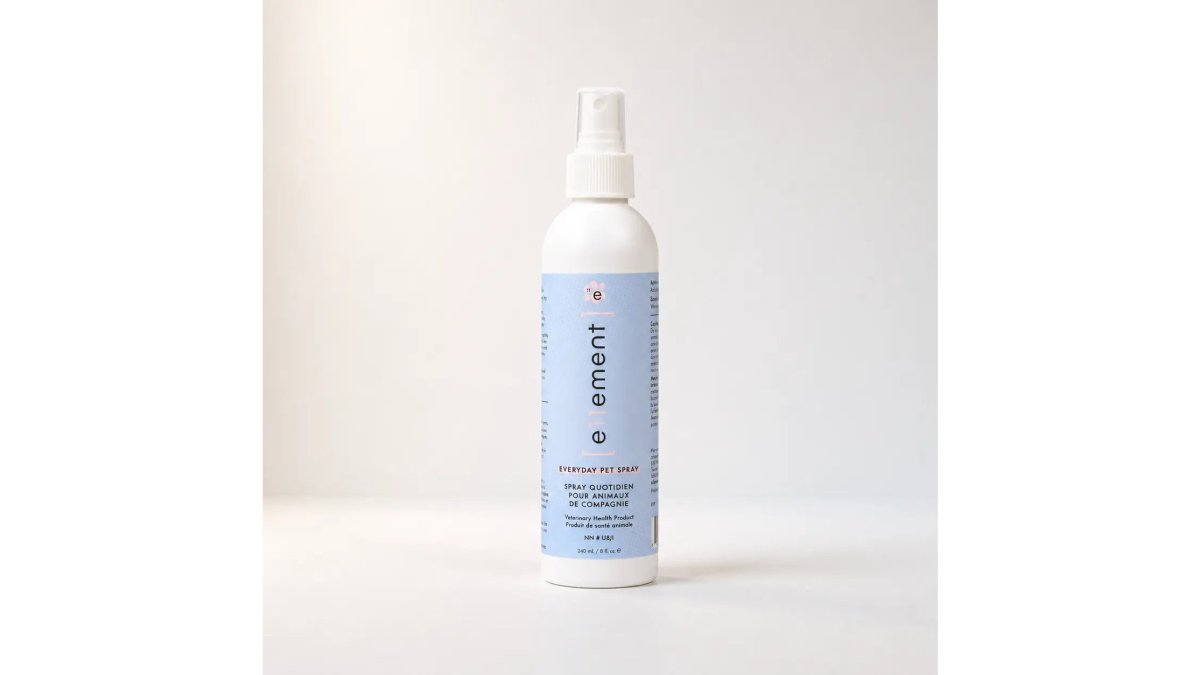
Hypochlorous acid is a molecule your pet's immune system produces naturally to help manage microbes on skin. A stabilized hypochlorous acid spray puts that same molecule into a gentle topical format for everyday cleansing of skin, coat, and paws.
It is not a shampoo replacement or a treatment for a diagnosed skin condition.

Our hypochlorous pet spray is built on exactly three ingredients: water, salt, and HOCl. That is the entire list. For dogs, cats, and rabbits with scent sensitivities, a formula with no added fragrance is often the difference between a product a pet tolerates and one they fight.
The question we hear most is whether hypochlorous acid is basically bleach. It is not: the two are different molecules with different chemistry and behavior on skin.
Building a Full Grooming Routine Beyond Shampoo
A complete routine covers coat, skin, paws, ears, and mouth, and runs on a schedule rather than an emergency basis. Shampoo is one part of that, not the whole thing.
- Brushing: two to three times weekly for most coats, daily during shedding season
- Paw care: wipe or rinse after outdoor exposure, especially in wet or salted conditions
- Ear checks: weekly visual check, cleaning only when your veterinarian advises it
The between-bath step is where most routines fall apart. Owners either bathe too often, which strips the skin, or do nothing, which lets irritants sit on the coat. A gentle daily spray closes that gap without over-washing.
Ingredients to Avoid and Mistakes That Make Skin Worse
The most common grooming mistake is treating itching with more product instead of less. Every added formula is another chance for a reaction, and stacking products makes it harder to identify the cause. 'Avoid this ingredient' lists are only useful if you understand why each one matters and how strong the evidence is, so this section separates well-supported concerns from precautionary ones.
Ingredients Worth Scrutiny, and the Mechanism Behind Each
- Added fragrance and essential oil blends. Fragrance mixes are a leading cause of contact reactions in dogs, and 'natural fragrance' or 'essential oil blend' is still fragrance. Essential oils contain volatile compounds that can irritate reactive skin, and some, including tea tree oil, are toxic to dogs if ingested or applied at high concentration. This is the best-supported concern on the list.
- Harsh surfactants. High concentrations of strong sulfates strip the skin's lipid barrier, which then loses water and becomes more permeable to irritants. The result is a cycle: the skin feels tight, the dog itches, the owner bathes again. The concern is real but dose-dependent.
- Alcohol-based formulas. Alcohols evaporate quickly and take skin moisture with them, which dries the barrier. For a dog already prone to dry or flaky skin, an alcohol-heavy spray works against you.
How to Assess Safety Instead of Trusting the Word 'Natural'
'Natural' is not a safety claim, arsenic and poison ivy are natural. The useful question is not 'is this ingredient natural?' but 'what is the evidence that this concentration is safe for this dog?' Four practical tests:
- Is the full ingredient list published, with concentrations or at least order of prevalence? Ingredients are listed in descending order by weight in most jurisdictions, so the first five names tell you what the product mostly is.
- Is the function of each ingredient stated? A cleanser, a preservative, and a fragrance each carry different risk profiles.
- Is there a safety data sheet or veterinary information line? For leave-on products especially, the maker should be able to point you to safety documentation.
- Does the claim match the evidence? 'Soothing' is a marketing word; 'fragrance-free' and 'pH-balanced' are checkable. Prefer the checkable claims.
Three Mistakes That Make Skin Worse
- Bathing too often. Frequent shampooing strips the skin barrier, which then overproduces oil and itches more. The fix is less frequent bathing and a between-bath cleansing option, not a stronger shampoo.
- Not rinsing thoroughly. Residual shampoo left in the coat is a common itch trigger, and it is entirely preventable. Rinse until the water runs clear, then rinse again.
- Using human products. Human shampoo is formulated for human scalp pH and is not appropriate for a dog's skin. The same logic applies to human leave-on sprays and wipes.
If your dog has a persistent skin issue, that is a veterinary question, not a grooming question. Grooming products support healthy skin. They do not diagnose or treat conditions, and no ingredient list substitutes for a diagnosis.
Choosing Your Everyday Pet Spray
The right everyday spray has an ingredient list short enough to explain out loud and a format your pet will actually tolerate. That is the entire selection criteria, and it eliminates most of the shelf.
For us, that means a formula with no added fragrance, no dyes, and no preservative system to screen.
If you have a dog with sensitive skin, a cat who reacts to scent, or a rabbit with dry patches, start with the shortest ingredient list you can find and test on a small area first.
Frequently Asked Questions
What is the best natural thing to wash your dog with?
A shampoo built for a dog's skin pH is the safest starting point, not a human product. Look for a short ingredient list, a named cleansing base, and no synthetic fragrance. For routine cleaning between baths, a hypochlorous acid spray like e11ement Pet's Everyday Pet Spray ($7.99) cleans skin and paws without lather or rinsing. Bathe most dogs every four to eight weeks unless a vet advises otherwise, and spot-clean paws and skin in between.
Are natural dog grooming products safe for sensitive skin?
Not automatically. Plant-derived ingredients can still trigger reactions, and essential oils are a common culprit in itchy dogs. Patch test any new product on a small area of skin and watch for 24 hours. Choose fragrance-free formulas, avoid dyes, and pick products with a verifiable safety record. A hypochlorous acid spray for dogs is a reasonable option for sensitive skin because it contains only water, salt, and HOCl, but stop use and call your vet if redness or scratching increases.
What ingredients should I avoid in dog grooming products?
Skip synthetic fragrance, artificial dyes, parabens, phthalates, and high concentrations of tea tree or citrus oils, which are toxic to dogs in larger amounts. Also avoid shampoos with harsh sulfates if your dog's skin is already dry. Check for a Veterinary Health Product number on products making health claims, since that indicates the formula is registered for sale in the Canadian market. When in doubt, fewer ingredients is easier to evaluate.
How often should I bathe my dog?
Most dogs do well with a bath every four to eight weeks. Dogs with oily coats or active outdoor lifestyles may need one every three to four weeks, while dry or sensitive-skinned dogs should stretch it further. Over-bathing strips natural oils and can worsen itching. Between baths, use grooming wipes or a hypochlorous acid spray on paws, folds, and hot spots to keep skin clean without a full wash.
Most pet owners are managing skin and coat issues with too many products and too little consistency. A short ingredient list, a routine schedule, and a gentle daily spray will do more than a cabinet full of specialty formulas. Get started with e11ement Pet and give your dog a daily care routine built on three ingredients: water, salt, and HOCl.


