


Table of Contents
- Start With a Calm Assessment, Not a Product
- What to Put on a Dog's Itchy Skin (and What to Skip)
- A Soothing Bath for Itchy Dogs, Step by Step
- Moisturizing, Fatty Acids, and Diet Support
- Find and Reduce the Triggers Behind the Itching
- Track Symptoms So You Can Tell What Works
- When to See a Vet for Dog Itching
- Conclusion
- Frequently Asked Questions
Last Updated: October 21, 2026
Start With a Calm Assessment, Not a Product
When you search for how to soothe a dog's itchy skin at home, the urge to grab a bottle and spray something is strong.
First, check the skin itself. Part the coat and look for redness, scabs, bumps, or dark patches. Note the smell.
Next, watch where the scratching happens. Paw licking, ear rubbing, and face rubbing often signal allergies. Scratching along the back and tail base can mean fleas.
Then ask three questions:
- Is the itch new, or has it been building for weeks?
- Did anything change recently (food, shampoo, season, new bedding)?
- Is your dog otherwise eating, drinking, and playing normally?
At e11ement Pet, we hear from owners who skipped this step and treated the wrong problem for weeks. A five-minute assessment saves that.
What to Put on a Dog's Itchy Skin (and What to Skip)
The safest everyday option for mild irritation is a gentle, lick-safe topical spray, paired with cool water and a soft cloth. Anything with fragrance, dye, or a long chemical name should stay on the shelf. The reason is simple: a dog's skin is thinner than a human's, and anything left on the coat ends up in the mouth during grooming. That makes lick-safety the first filter for any home remedy.
Safe topical options for everyday irritation
Simple is better. These options suit mild redness, paw irritation after walks, and hot spots caught early:
- Hypochlorous acid spray - a gentle cleanser that supports skin and coat; our Hypochlorous Pet Spray uses water, salt, and HOCl, nothing else. HOCl is the same molecule certain immune cells produce to manage microbes, which is why it is well tolerated on intact skin and safe if licked in small amounts.
- Cool water compress - a damp cloth held on the area for a few minutes. Cold narrows blood vessels and temporarily dulls the itch signal, which is why it works best in the first hour after a walk.
- Plain colloidal oatmeal rinse - ground oats in lukewarm water, poured over and rinsed well. Oatmeal contains avenanthramides, compounds studied for their calming effect on irritated skin; the key is to rinse so no residue dries on the coat.
- Diluted aloe - pure aloe gel, never a scented or colored product. Aloe holds moisture against the skin, but the latex layer under the leaf can irritate, so use the clear inner gel only.
Home remedies that carry real risk
A few popular internet remedies can make things worse. Skip these unless your vet says otherwise:

- Essential oils (tea tree, peppermint, eucalyptus) - toxic to dogs when licked. Tea tree oil in particular can cause drooling, wobbliness, and tremors even at low dilutions, and cats in the household are at higher risk from residue on bedding.
- Hydrogen peroxide on skin - irritates tissue and delays healing. It damages healthy cells along with bacteria, so it is a poor choice for anything beyond a fresh, dirty wound your vet has approved.
- Baking soda pastes - drying and abrasive on broken skin. The powder pulls moisture out of the skin barrier, and scrubbing it into a hot spot opens the door to infection.
- Human antihistamines or creams - dosing and ingredients differ for dogs. Zinc oxide, hydrocortisone, and lidocaine are common in human products and can be harmful if a dog grooms them off; never guess a dose from a human label.
- Apple cider vinegar - often recommended as a rinse, but its acidity stings open skin and does nothing for the underlying cause. If you try it at all, dilute heavily and keep it away from broken areas.
Patch-test any new topical on a small area of intact skin for 24 hours before using it more widely. Note the time and the product in your symptom log so you can connect any reaction to its cause.
A Soothing Bath for Itchy Dogs, Step by Step
A soothing bath for itchy dogs removes allergens, calms irritation, and lets you inspect the whole coat. Done right, it takes about fifteen minutes.
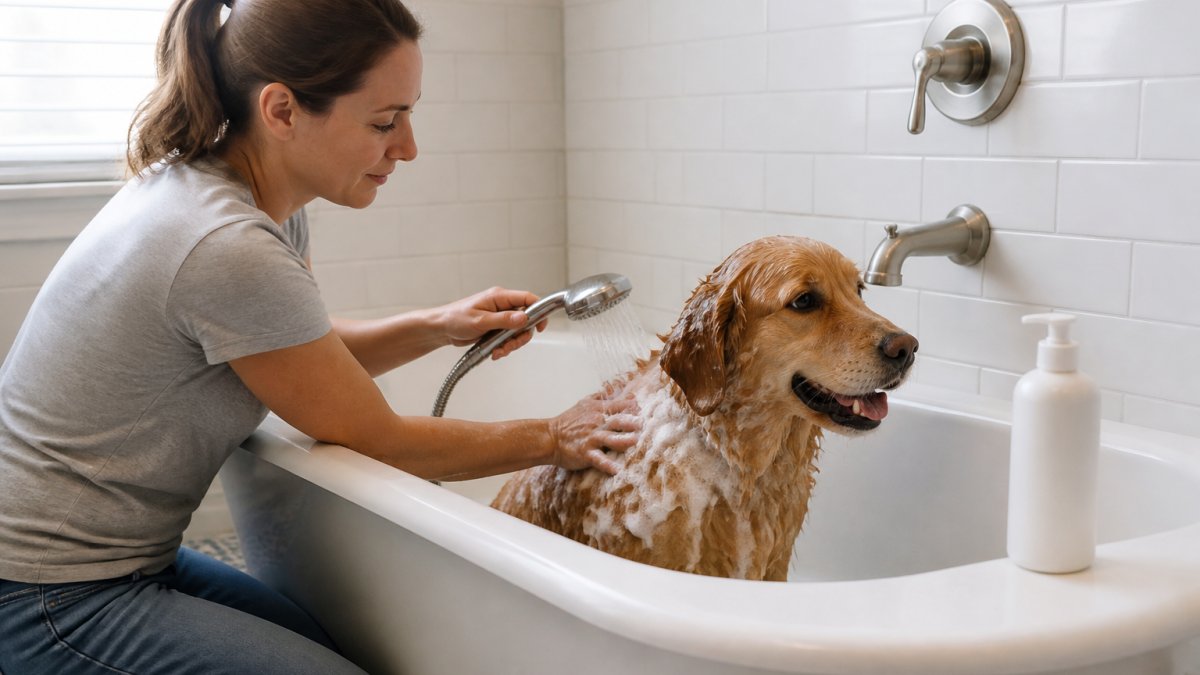
Here is the routine we recommend:
- Brush out loose hair and debris first.
- Run lukewarm water, never hot.
- Wet the coat fully down to the skin.
- Apply a soothing shampoo, working it into a light lather.
- Leave it on for the time the label states.
- Rinse until the water runs completely clear.
- Towel dry and keep your dog warm.
Choosing a shampoo and rinsing properly
Look for an oatmeal or aloe-based, fragrance-free shampoo labeled for dogs. Avoid medicated shampoos unless your vet prescribed one.
Rinsing matters more than lathering. Leftover shampoo residue causes itching on its own. Rinse twice if you are unsure, and pay attention to armpits, the groin, and between the toes.
Moisturizing, Fatty Acids, and Diet Support
Dry, flaky skin responds well to moisture from the inside out. Fatty acids, especially fish oil, support the skin barrier and reduce dryness over time.
Ask your vet for the right dose before adding any supplement. Too much oil causes loose stools. A common starting point is a fish oil made for pets, given with food.
Diet deserves a mention too. If itching is year-round and paired with paw licking or ear issues, a food allergy may be involved.
Between meals and supplements, daily care still matters. That is where our Hypochlorous Pet Spray fits into a routine: light, lick-safe, and simple enough for daily use on skin, coat, and paws.
Find and Reduce the Triggers Behind the Itching
Most recurring itching has a trigger you can reduce. Finding it takes some detective work, but it pays off. The trick is to change one variable at a time and give each change long enough to show a result, usually two to three weeks. Changing bedding, food, and shampoo in the same week tells you nothing about which one helped.
Common environmental triggers include:
- Pollen and grass, especially after walks in spring and late summer
- Dust mites in bedding and soft furnishings
- Mold in damp areas of the home, bathrooms, and basements
- Fleas and ticks, which can survive indoors even in cold months
- Harsh household cleaners or lawn treatments
- New shampoos, fabrics, or foods
A step-by-step plan to isolate the trigger
Work through these steps in order, and log each change so you can compare results:
- Rule out parasites first. Confirm flea prevention is current and check the tail base and groin for flea dirt. If you see live fleas or ticks, treat the pet and the home before chasing allergies.
- Rinse after outdoor time. Wipe paws, belly, and groin with a damp cloth after every walk. Pollen contact is a common driver of paw licking, and a rinse removes it before it is groomed off.
- Wash bedding weekly in hot water. Dust mites and pollen collect in fabric; hot water and a hot dryer cycle reduce both.
- Switch to fragrance-free home products. Laundry detergent, floor cleaners, and air fresheners can leave residue on bedding and floors that irritates skin on contact.
- Keep the coat short in itchy areas. A trimmed belly or paw pad makes bathing and inspection easier and reduces the humidity that yeast likes.
- Review diet last, with your vet. If itching is year-round and paired with paw licking or ear issues, a vet-guided elimination diet is the only reliable way to test food allergy.
Keep a simple exposure log alongside your itch log: note walks, bedding washes, new products, and any change in food. Patterns that are invisible day to day often show up across two weeks of notes, and a veterinarian can use that record to skip guesswork.
Track Symptoms So You Can Tell What Works
You cannot tell whether a remedy worked if you never wrote down the starting point. A simple log fixes that.
Track these daily for two weeks:
- Itch level from 1 to 10
- Where your dog scratches most
- What you applied or fed
- Any change in diet, bedding, or outdoor time
A notebook works. A phone note works. The point is consistency.
Look for trends, not single days. If itching drops after baths but climbs three days later, the shampoo may be helping while something else keeps triggering it. If nothing changes after two weeks of careful home care, that is useful information too.
When to See a Vet for Dog Itching
See a vet promptly if itching is severe, ongoing, or paired with any of these signs:
- Open sores, bleeding, or hot spots
- Hair loss in patches
- A musty or yeasty smell
- Ear discharge or head shaking
- Lethargy, weight loss, or appetite changes
- Itching that keeps your dog awake at night
Some cases need a veterinary diagnosis, not another product. Skin infections, parasites, and allergies often need prescription treatment. Home care supports that work; it does not replace it.
Conclusion
Itchy skin rarely resolves overnight, and the owners who get results are the ones who assess calmly, treat gently, and track what changes. Start with a proper look at the skin, choose simple topical options, bathe correctly, and remove the triggers you can control.
When daily care is part of the routine, our Hypochlorous Pet Spray makes it easy. It uses the same molecule your pet's immune system makes, is made in Canada, and is gentle enough for daily use on skin, coat, and paws.
Frequently Asked Questions
What can I safely put on my dog's itchy skin at home?
Start with cool water compresses, a gentle oatmeal or aloe-based rinse, and a lick-safe hypochlorous acid spray to cleanse irritated skin without stinging. Avoid human hydrocortisone, essential oils, tea tree, and zinc creams, which dogs can lick off and which can cause harm. If the skin is broken, oozing, or smells, skip home topicals and book a veterinary visit. A plain, minimal-ingredient product is the safest starting point for sensitive dogs.
Can I bathe my dog to help relieve itching?
Yes. A soothing bath for itchy dogs removes allergens, crust, and saliva from the coat and calms irritated skin. Use lukewarm water, a fragrance-free oatmeal or moisturizing shampoo, and rinse thoroughly because leftover product causes more itching. Bathe every one to two weeks during a flare, then space it out. Pat dry rather than rubbing, and make sure the skin between toes and in skin folds dries fully to prevent a skin infection.
How long should I try home care before seeing a vet?
Give a consistent at-home plan seven to ten days. If itching is not clearly improving, or if it returns as soon as you stop, that points to an underlying cause such as allergies, fleas, or a skin infection that home care cannot resolve. Book a veterinary diagnosis sooner if you see redness spreading, hair loss, hot spots, or your dog scratching through the night. Early treatment is cheaper than managing a chronic flare.
Can I give my dog human allergy medicine for itchy skin?
Do not dose your dog with human allergy medication on your own. Some products contain decongestants or sweeteners that are unsafe for dogs, and the correct dose depends on weight and health history. Ask your veterinarian before giving anything by mouth, including supplements and fish oil. For immediate comfort while you wait, use a cool compress, a soothing bath, and a lick-safe topical spray rather than reaching for the medicine cabinet.


