


Last Updated: November 2, 2026
Quick Summary
A natural alternative to dog medicated shampoo suits routine cleansing, mild odor, and everyday paw and coat care, not diagnosed skin disease. Gentle cleansers and hypochlorous acid sprays can soothe and maintain skin, but they cannot treat infections, kill parasites, or replace a prescription. Book a vet for spreading redness, hair loss, open sores, or itch that disrupts sleep.
- Natural cleansers fit routine maintenance, mild itch, post-walk grime, and odor between baths.
- If itch returns within 48 hours of every bath or worsens, book a veterinary visit.
- A gentle bath every 7 to 10 days plus spot cleaning usually handles mild, grime-related itch.
- Avoid harsh sulfates, synthetic fragrance, dyes, and concentrated essential oils like tea tree and citrus.
- Follow a prescribed medicated shampoo schedule exactly and never substitute a gentle wash mid-course without asking your vet.
Table of Contents
- When a Natural Alternative to Dog Medicated Shampoo Makes Sense
- Natural Dog Shampoo for Itchy Skin: What It Can and Cannot Do
- Medicated Dog Shampoo Alternatives Worth Knowing
- Safe Ingredients for Dog Shampoo and What to Avoid
- How Often to Bathe a Dog With Itchy Skin
- The Risks of DIY Shampoo Recipes and Essential Oils
- Choosing a Gentle Daily Cleanser for Your Dog
- Frequently Asked Questions
When a Natural Alternative to Dog Medicated Shampoo Makes Sense
A natural alternative to dog medicated shampoo makes sense for routine cleansing, mild odor, and everyday paw and coat care, not for diagnosed skin disease. At e11ement Pet, we see the confusion constantly: owners reach for gentle products when the real need is veterinary treatment, or reach for prescription shampoo when a mild cleanser would do.
The distinction matters more than most product pages admit. Shampoo therapy is generally understood as a treatment option, not just cleansing, which means a soothing wash is not automatically a substitute for a prescribed one.
Here is the practical split we recommend:
- Natural or gentle cleanser: routine maintenance, mild itch, post-walk grime, odor between baths
- Medicated shampoo: diagnosed infections, mange, yeast overgrowth, and conditions your veterinarian has named
- Veterinary visit first: spreading redness, hair loss, open sores, or itch that disrupts sleep
Below, we break down what natural options can and cannot do, what ingredients are safe, and how to bathe an itchy dog without making things worse.
Natural Dog Shampoo for Itchy Skin: What It Can and Cannot Do
Natural dog shampoo for itchy skin can soothe and moisturize. It cannot treat an infection, kill parasites, or replace a prescription. That is the honest boundary.
Soothing means reducing surface irritation and supporting the skin barrier. Oatmeal and aloe vera are the common examples, and Care.com's overview of homemade dog shampoo options notes both may appear in homemade recipes while cautioning that not every option suits every dog. Treating means addressing a cause: bacteria, yeast, parasites, or an immune response. Those need a diagnosis.
What most guides miss is that itch is a symptom, not a condition. A dog scratching at the base of the tail may have fleas. A dog chewing its paws may have allergies or a yeast issue. A gentle cleanser can calm the surface while you figure out the cause, but it will not resolve either.
Our rule of thumb: if a natural product calms things within a few days of regular use, you are probably dealing with mild irritation. If the itch returns within 48 hours of every bath, or worsens, book the vet.
Medicated Dog Shampoo Alternatives Worth Knowing
Medicated dog shampoo alternatives fall into three practical groups: soothing cleansers, barrier-support sprays, and bathing routine changes. Each fits a different situation.
Gentle daily sprays are the option most owners overlook. A hypochlorous acid spray can be used between baths for daily care of skin, coat, and paws. Our Hypochlorous Pet Spray uses water, salt, and HOCl, the same molecule your pet's immune system naturally produces, and it is designed for daily use on skin, coat, and paws.

Rinsing paws after walks and drying skin folds thoroughly can help reduce grime and moisture.
| Option | Best For | Limits | Routine |
|---|---|---|---|
| Soothing oatmeal cleanser | Mild itch, dry coat | No antimicrobial action | Weekly bath |
| Hypochlorous acid spray | Daily paw and coat care | Not a treatment for infection | Daily or after outings |
| Barrier-support conditioner | Dry, flaky skin | Needs consistent use | After each bath |
| Veterinary medicated shampoo | Diagnosed conditions | Requires vet direction | As prescribed |
Safe Ingredients for Dog Shampoo and What to Avoid
Safe ingredients for dog shampoo are the ones with a clear job, a known mechanism, and a low irritation risk at the concentration used. The list is short, and the reasons behind it matter more than the names.
Hypochlorous acid (HOCl). The same molecule your pet's immune system naturally produces. Our hypochlorous spray is designed for frequent, gentle daily use on skin, coat, and paws.
Ingredients to avoid or question:
- Harsh sulfates and strong detergents (SLS, high-foaming dish soaps): strip sebum and intercellular lipids, worsening dryness and itch.
- Synthetic fragrance and dyes: among the most common contact irritants on sensitive skin, and the reason "fragrance-free" is a meaningful claim.
- Concentrated essential oils (tea tree, citrus, eucalyptus, peppermint): can be risky, especially when undiluted or licked.
- Vinegar and acidic rinses on broken skin: sting and can delay healing.
- Human medicated shampoos (selenium sulfide, ketoconazole, benzoyl peroxide) used without direction: these are actives with real effects and real adverse-event profiles; they belong under veterinary guidance, not in a home rotation.
Watch Out: "Natural" on a label is a marketing term, not a safety standard. In this market, cosmetic and veterinary health product claims are regulated, but "natural" itself carries no legal definition. Read the ingredient list and the intended-use statement, not the front of the bottle.
A practical test: if you cannot explain what an ingredient does and why it is at that concentration, do not put it on a dog with already-compromised skin.
How Often to Bathe a Dog With Itchy Skin
How often to bathe an itchy dog depends on why the dog is itchy, not on a single number. The common default is once a week with a gentle cleanser unless a veterinarian sets a different schedule, but the more useful skill is reading the symptom pattern and matching the response to it.
Use this decision path:
- Mild, seasonal, or grime-related itch (no redness, no odor, no hair loss): a gentle bath every 7 to 10 days, plus spot cleaning between baths, is usually enough. If the itch settles within a few days and stays settled, you are likely managing surface irritation.
- Itch that returns within 48 hours of every bath, or worsens after bathing: stop increasing frequency and book a veterinary visit. Rebound itch after a bath is a signal that the surface is not the problem.
- Redness, odor, greasy or scaly patches, hair loss, or open sores: do not experiment with frequency. These point to infection, yeast overgrowth, or a named skin disease that needs diagnosis before any shampoo, natural or medicated, is chosen.
- A dog already on a prescribed medicated shampoo: follow the prescribed schedule exactly. Do not stretch intervals or substitute a gentle wash mid-course without asking the prescribing veterinarian, because stopping early is a common reason treatment fails and infection returns.
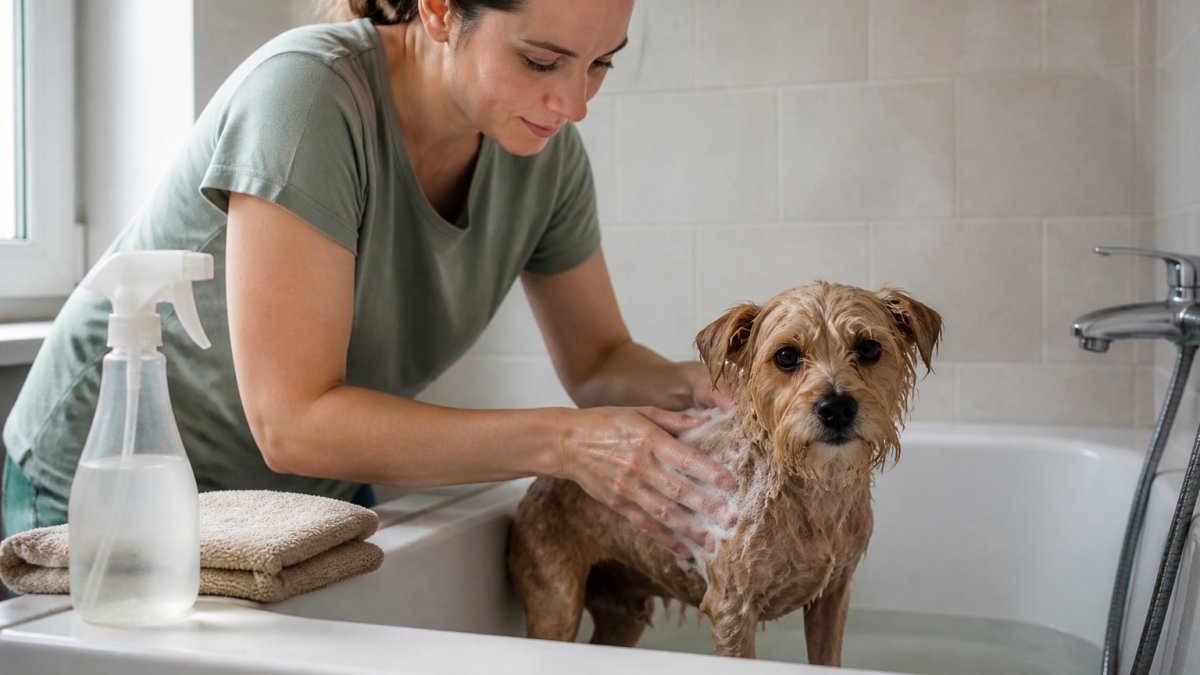
Between baths, spot-clean. Paws, belly, and skin folds collect the most dirt and moisture, and a daily wipe or spray handles those areas without drying the whole coat. For dogs that hike or visit parks often, rinse paws after every outing.
Signs you are bathing too often:
- Coat feels dry or straw-like
- Flaking increases after baths
- Itch spikes in the 24 hours following a wash
If any of those appear, stretch the interval and lean on spot cleaning instead.
Frequency is a symptom-management decision, not a fixed rule. If a gentle wash calms the skin and the calm holds, you are in maintenance territory. If the itch keeps coming back faster than the baths, the next step is a veterinary diagnosis, not a stronger shampoo.
The Risks of DIY Shampoo Recipes and Essential Oils
DIY shampoo recipes carry real risks: wrong dilution, irritating ingredients, and no way to know whether the mixture suits your dog's skin. Essential oils are the biggest concern.
Dogs lick their coats. Anything applied to the skin ends up ingested, and some essential oils are unsafe in small amounts. Concentrated tea tree, citrus, and eucalyptus oils are the usual offenders. Even dog-safe oils need proper dilution, and most home recipes do not measure precisely.
Other DIY pitfalls:
- Dish soap bases: degrease the coat and disrupt the skin barrier
- Vinegar rinses: sting irritated or broken skin
- Batch mixing: homemade products grow bacteria without preservatives
If you want to try a recipe, patch test on a small area and stop at the first sign of redness. Better yet, choose a product with a short, transparent ingredient list so you know exactly what is going on the skin.
Choosing a Gentle Daily Cleanser for Your Dog
Choosing a gentle daily cleanser comes down to four checks: ingredient transparency, intended use, suitability for daily application, and whether it fits your dog's temperament. A product that sits unused because your dog hides at the sight of it helps no one.
Run this checklist before you buy:
- Ingredient list is short and fully disclosed
- Product is labeled for daily or frequent use
- No synthetic fragrance, dyes, or harsh detergents
- Suitable for the areas you need to treat: paws, coat, skin folds
- Application method suits your dog: spray versus full bath
- Clear guidance on when to stop and call a veterinarian
For owners who want a gentle, non-medicated option for routine care, our Hypochlorous Pet Spray is formulated for daily use on skin, coat, and paws, with water, salt, and HOCl and nothing else.
Best for: daily paw and coat care and post-outing cleanup. Skip if: your dog has a diagnosed skin condition that requires prescription treatment.
Frequently Asked Questions
Can natural dog shampoo replace medicated shampoo?
Not always. A natural shampoo can soothe and cleanse, but it is not a substitute for a veterinarian-prescribed medicated shampoo when a diagnosed skin condition is present. Medicated shampoos are typically prescribed for a variety of skin conditions and should be used as your veterinarian instructs. If your dog has a persistent or worsening issue, speak to your vet before switching. A gentle daily cleanser can support routine skin care, but it should not replace treatment for an active infection or diagnosed condition.
What natural ingredients are safe for a dog's skin?
Oatmeal, aloe vera, and coconut oil are commonly used in homemade and natural shampoos, but not every option suits every dog or skin problem. Look for pH-balanced, fragrance-free formulas with minimal ingredient lists. Avoid harsh chemicals and concentrated essential oils, which can irritate sensitive skin. If you are unsure, patch test a small area or ask your veterinarian.
How often should I bathe a dog with itchy skin?
Frequency depends on the cause of the itching and your veterinarian's advice. Over-bathing can strip natural oils and worsen dry, irritated skin, while under-bathing can let allergens build up. Many pet owners find a gentle, non-scented cleanser useful for spot cleaning paws and problem areas between full baths. If itching persists, ask your vet for a bathing schedule tailored to your dog's condition rather than guessing. Track flare-ups to see whether bathing helps or aggravates the skin.
Is it safe to use essential oils in dog shampoo?
Essential oils carry real safety risks for dogs. They are highly concentrated, and some are toxic when ingested or applied to skin, especially for cats and small pets. Not all natural ingredients are appropriate for every dog, and blanket use of essential oils is not advisable. Fragrance-free, unscented formulas reduce the risk of irritation and reactions. If you want a scented product, check with your veterinarian first, and never apply undiluted oils to your pet's coat or paws.
If your dog's itch keeps coming back after every gentle wash, the problem is likely bigger than bathing. e11ement Pet makes a daily hypochlorous acid spray with a three-ingredient formula, designed for skin, coat, and paw care and gentle enough for routine use. Get started with e11ement Pet and give your dog calmer, cleaner skin between baths.


